
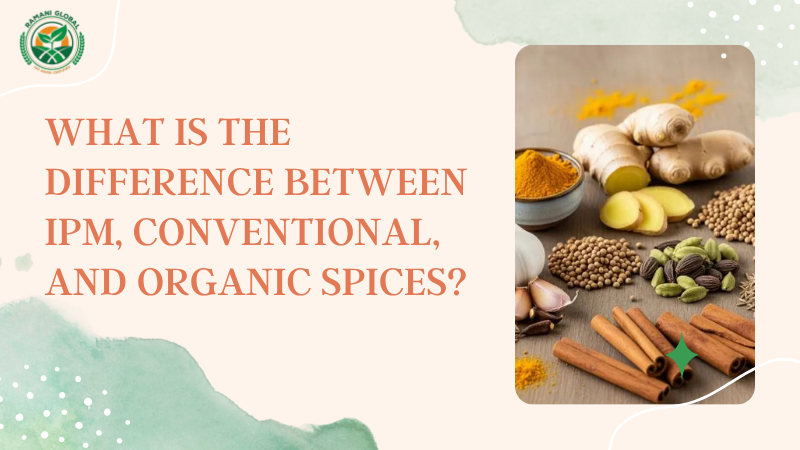
In today’s global spice trade, understanding the difference between IPM spices, organic spices, and conventional spices is essential for buyers, importers, and food businesses. Each category represents a unique farming approach, quality standard, and market requirement. Choosing the right type of spice depends on factors such as certification needs, safety standards, pricing, and end-use applications.
Organic Spices
Organic spices are grown using completely natural farming methods without the use of synthetic fertilizers, pesticides, or chemicals. Farmers rely on techniques such as composting, crop rotation, and biological pest control to maintain soil health and protect crops. These spices are certified by recognized authorities, ensuring compliance with international organic standards.
Due to their purity, sustainability, and eco-friendly nature, organic spices are highly demanded in premium global markets, especially in regions where consumers prioritize health and environmental responsibility. While organic spices often come at a higher cost, they offer unmatched quality and are ideal for brands focusing on clean-label and natural products.
IPM (Integrated Pest Management) Spices
IPM spices are produced using a balanced and controlled approach known as Integrated Pest Management. This method combines natural pest control practices with minimal and carefully monitored use of chemicals only when necessary. The goal is to reduce pesticide usage while maintaining crop quality and yield.
IPM farming ensures that spices meet strict pesticide residue limits, making them suitable for export markets that require compliance with international food safety regulations. These spices serve as a practical middle ground between organic and conventional categories, offering both safety and cost efficiency. As a result, IPM spices are widely preferred by buyers looking for high-quality, low-residue spices without the premium pricing of fully organic products.
Conventional Spices
Conventional spices are cultivated using standard agricultural practices, which may include the use of approved fertilizers and pesticides to enhance productivity and protect crops. This method allows for higher yields and consistent supply, making conventional spices the most widely available option in the market.
These spices are cost-effective and ideal for bulk supply and large-scale consumption, particularly in markets where pricing and availability are key factors. While conventional spices meet basic safety and quality standards, they may not carry the certifications associated with organic or IPM products. However, they remain an important segment of the global spice industry due to their accessibility and efficiency.
Key Differences at a Glance
The primary difference between these three categories lies in their farming methods, chemical usage, certification, and target markets. Organic spices focus on complete natural cultivation, IPM spices emphasize controlled and minimal chemical use, and conventional spices rely on standard farming techniques for maximum productivity.
Choosing the Right Category
Selecting between organic, IPM, and conventional spices depends on your business needs and market demands. If your focus is on premium, health-conscious consumers, organic spices are the ideal choice. For markets that require compliance with safety standards while maintaining cost efficiency, IPM spices provide the perfect balance. Conventional spices, on the other hand, are best suited for bulk buyers and general market distribution.
Conclusion
Each category plays a vital role in the global spice supply chain, catering to different customer preferences and industry requirements. Understanding these differences helps businesses make informed sourcing decisions and ensures the right product fit for their target market.
Ramani Global is a trusted name in IPM, conventional, and organic spices buyer and supplier, backed by decades of industry expertise and deep market understanding. With a strong focus on quality, consistency, and reliable sourcing, Ramani Global delivers premium spices that meet international standards and diverse global requirements.